
29 Apr, 2026
The Ultimate Guide to Japanese Sunscreen: Why J-Beauty Leads UV Protection in 2026
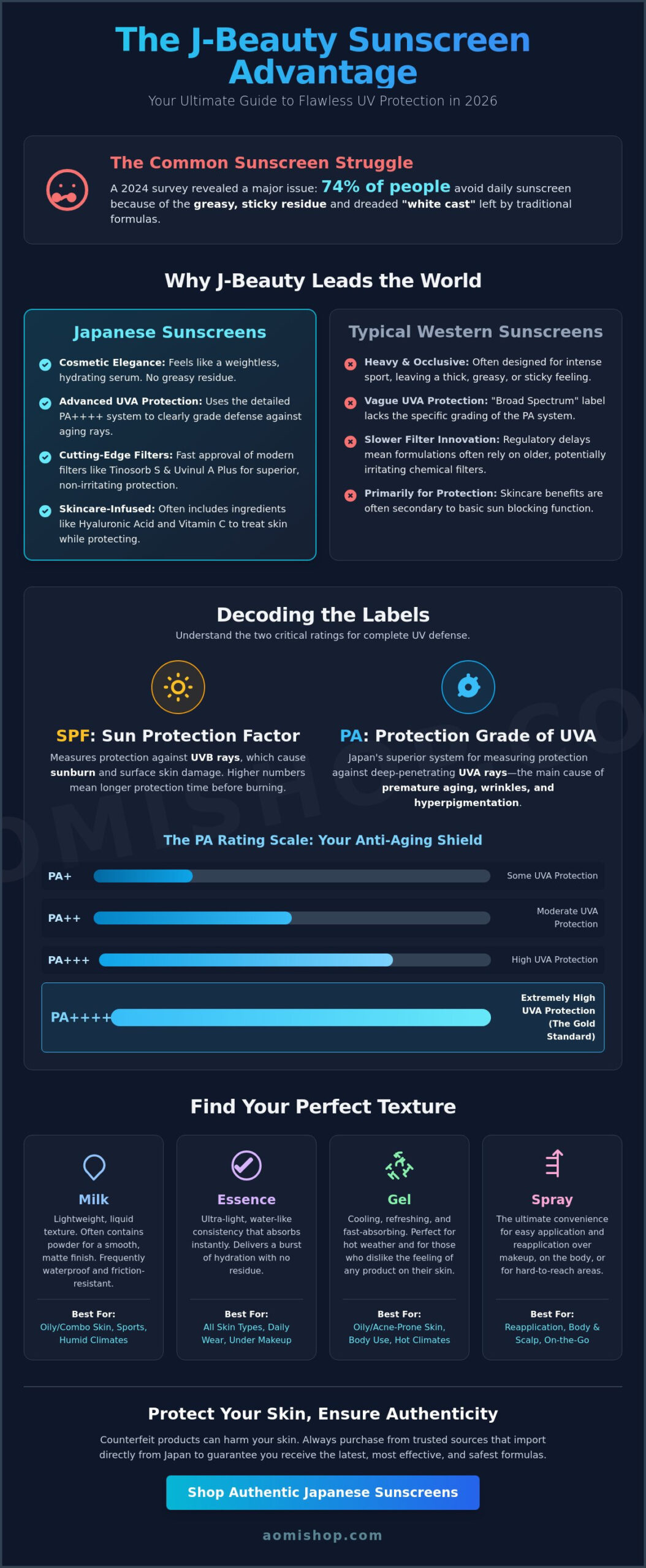
What if your daily UV protection felt less like a heavy, sticky chore and more like a luxury hydration treatment? A 2024 survey of skincare users found that 74% of people avoid daily SPF because of the greasy residue it leaves behind. You’ve likely dealt with the frustration of a ghostly white cast or the sudden breakouts that follow a day in the sun. It’s hard to feel confident when your japanese sunscreen search leads to confusing PA++++ ratings and the constant fear of purchasing counterfeit products from unreliable vendors.
At AOMI shop, we believe protection shouldn’t be a compromise. You’ll learn exactly why J-Beauty formulas are leading the world in 2026 through superior Japanese filter technology and elegant, skin-first textures. This guide promises to help you find a weightless formula that acts as a worry solution for your specific skin concerns, whether you need oil control or deep hydration. We’re going to explore the top-rated imports for this year and show you how to secure authentic products directly from Japan to ensure your skin stays healthy, clear, and glowing.
Why Japanese Sunscreens are the Global Gold Standard in 2026
Japanese sunscreen has transformed from a niche beauty secret into a global necessity for anyone serious about skin health. In 2026, the distinction between skincare and sun protection has almost entirely vanished in Japan. This evolution is driven by “Cosmetic Elegance,” a design philosophy ensuring that products feel like weightless waters or silk serums rather than heavy greases. While many Western formulations still struggle with a “white cast” or sticky residue, J-Beauty labs use advanced micro-encapsulation to hide UV filters inside breathable, transparent spheres. The technical edge comes from Japan’s proactive regulatory environment. The PMDA (Pharmaceuticals and Medical Devices Agency) approves innovative filters significantly faster than the FDA. This allows Japanese brands to utilize modern ingredients like Tinosorb S and Uvinul A Plus. These filters provide high-performance protection against UVA and UVB rays without the irritation often found in older chemical ingredients. By 2026, these formulations also integrate 2.0% hyaluronic acid and stabilized Vitamin C, treating the skin while shielding it from the sun.The History of Sun Protection in Japan
The Japanese obsession with UV protection is rooted in the cultural concept of “Bihaku,” which translates to “beautifully white.” This isn’t about changing skin tone but rather achieving a clear, radiant, and spot-free complexion. For over 100 years, Japanese consumers have viewed the sun as the primary enemy of skin longevity. In the early 2000s, protection was often thick and physical. However, the 2010 launch of Biore’s Watery Essence changed everything. It pioneered the “water-like” texture that now defines the industry, proving that high SPF doesn’t require a heavy feel.J-Beauty vs. Western Sunscreens: The Key Differences
Western sunscreens are frequently designed for “sport” or “beach” use, prioritizing 80-minute water resistance over daily comfort. In contrast, Japan categorizes products into Daily Wear and Active Wear. Daily versions act as makeup primers, offering a “glow” finish that works under foundation. Active versions utilize “Aqua Booster” or “Friction-Resistant” technologies. These innovations, perfected by brands like Shiseido Anessa, actually make the UV-protective film stronger when it comes into contact with sweat or heat. Another major differentiator is the transparency of UVA protection. While Western labels often use a generic “Broad Spectrum” claim, Japanese products use the PA system to provide a specific grade of UVA defense. In 2026, the PA++++ rating remains the gold standard for preventing deep-tissue damage and premature ageing. This level of detail ensures you know exactly how much protection you’re getting against the rays that cause wrinkles and hyperpigmentation.Decoding the Labels: Understanding SPF and PA++++ Ratings
Choosing a high-quality japanese sunscreen requires more than just checking the SPF number on the bottle. While SPF measures how well a product protects against UVB rays that cause surface burns, the PA rating is your primary defense against long-term cellular damage. To achieve complete protection, you must balance both. J-Beauty standards are among the strictest in the world, ensuring that the protection listed on the bottle is exactly what your skin receives. The “Super Waterproof” label is another indicator of Japanese quality. According to standards updated by the Japan Cosmetic Industry Association in late 2022, a product labeled “Super Waterproof” must maintain its stated SPF value after 80 minutes of water immersion. This rigorous testing provides a reliable Worry Solution for those with active lifestyles or those living in humid climates. Reading Japanese batch codes can be tricky, as they don’t always show a traditional calendar date. Generally, an unopened bottle is stable for 3 years from the date of manufacture. If you’re unsure about a product’s freshness, our specialized concierge service can help you source the newest batches directly from Tokyo warehouses.What is the PA Rating System?
The PA rating is the ‘Protection Grade of UVA’ based on Persistent Pigment Darkening (PPD) tests. This rating system developed in Japan offers a clear roadmap for preventing premature aging. UVA rays are the hidden culprits behind 90 percent of visible skin changes.- PA+: Provides some UVA protection for casual, indoor use.
- PA++: Moderate protection, suitable for short outdoor walks.
- PA+++: High protection against deep-penetrating rays.
- PA++++: The highest possible rating, offering extremely high protection against the rays that cause wrinkles and melasma.
Common Ingredients in Japanese Formulations
Japanese labs prioritize skin health by blending UV filters with skincare actives. Hyaluronic acid and Royal Jelly are frequently added to prevent the “drying” sensation common in western sunscreens. These ingredients help maintain the skin’s moisture barrier even under intense heat. Many popular japanese sunscreen formulas contain alcohol to ensure a weightless, quick-drying finish that works perfectly under makeup. It allows the product to set in under 30 seconds without a greasy residue. If you have extremely dry or reactive skin, look for “alcohol-free” (arukoru-furi) versions which use innovative gel-network technologies to achieve a similar lightness. Most modern J-Beauty sunscreens are “hybrids,” meaning they combine physical filters like Zinc Oxide for stability with advanced chemical filters like Tinosorb S for a transparent finish that leaves no white cast on any skin tone.Choosing Your Texture: Milk, Gel, Essence, or Spray?
In 2026, the most effective japanese sunscreen isn’t just the one with the highest SPF; it’s the one you enjoy wearing every single day. Texture has become the primary driver for daily compliance. If a product feels heavy or sticky, users often skip application, which leads to cumulative UV damage. Japanese laboratories have spent decades perfecting the sensory profile of UV filters to ensure they disappear into the skin within seconds. Sunscreen Milk remains the gold standard for high-intensity protection. These formulations typically utilize a bi-phase system that requires shaking to mix the UV filters. They provide a “super waterproof” finish that resists sweat and friction for up to 80 minutes in water. For those working in climate-controlled offices, Sunscreen Essence and Gel formats offer a weightless alternative. These water-based formulas provide a burst of hydration, often containing hyaluronic acid to prevent trans-epidermal water loss throughout the day.The Texture Selection Matrix
Selecting the right finish depends on your specific skin physiology and daily environment. For oily skin types, milks often provide a matte, sebum-controlling finish that lasts through high humidity. Dry skin types benefit from the dewy, glow-enhancing properties of an essence. Many of these products function as high-performance makeup primers. They create a smooth “skin-fit” layer that prevents foundation from pilling or oxidizing as the day progresses.- Milk: Fast absorption, matte finish, highest water resistance. Best for outdoor sports and high-humidity environments.
- Gel: Refreshing feel, natural finish, moderate water resistance. Best for oily or combination skin.
- Essence: Moisturizing feel, dewy finish, lower water resistance. Best for dry skin and indoor office wear.
J-Beauty Innovation: Sunscreen Sticks and Mists
The rise of “no-touch” application addresses both hygiene and the 2026 demand for convenience. Sunscreen mists utilize ultra-fine spray technology to deliver protection without disturbing your foundation. To avoid ruining your makeup, hold the mist 20 centimeters from the face and spray in a circular motion. Sunscreen sticks have also gained popularity for targeted protection on the nose, ears, and around the eyes. While convenient, sticks can sometimes tug on the skin; they’re best used as a “worry solution” for quick re-application throughout the day rather than as a primary base layer.The Best Japanese Sunscreens for Every Skin Type and Concern
Selecting the right japanese sunscreen requires understanding how specific formulations interact with your unique skin physiology. By 2026, J-Beauty brands have refined their UV filters to provide more than just a barrier; they now offer targeted solutions for specific dermatological worries. The Shiseido Anessa Perfect UV Sunscreen Skincare Milk remains the gold standard for overall performance. Its 2026 edition features upgraded Auto Repair Technology, which automatically smooths out gaps in the protective film caused by facial movements or rubbing. It’s a reliable choice for active individuals who need a high-performance, friction-resistant shield. For those with chronic dryness, Biore UV Aqua Rich Watery Essence continues to dominate the market. This formula uses a Micro Defense technology that covers every microscopic crevice of the skin while delivering a burst of hyaluronic acid and royal jelly extract. If your skin is reactive or easily irritated, Curel Intensive Moisture UV Protection is the clinical answer. It’s specifically formulated with ceramide-functioning ingredients and eucalyptus extract to bolster the skin barrier without using drying alcohols or fragrances. For users targeting hyperpigmentation, the Rohto Melano CC Intensive Anti-Spot series incorporates stable Vitamin C derivatives to brighten existing dark spots while preventing new melanin production during sun exposure.Best for Oily and Acne-Prone Skin
Oily skin types often struggle with the “greasy” feeling of traditional sun protection. Japanese “Milk” textures provide a lightweight, sebum-controlling finish that acts as a primer. The Hada Labo UV White Gel is a standout 5-in-1 product that functions as a lotion, essence, emulsion, cream, and mask. It uses a non-comedogenic formula that won’t clog pores, ensuring a matte appearance even in high humidity. This specific gel is popular for its ability to balance moisture levels while active powders absorb excess oil throughout the day.Advanced Protection: Anti-Pollution and Blue Light
In 2026, protection extends beyond the sun. Urban environments expose skin to PM2.5 particles, which are 2.5 micrometers or smaller, and high levels of blue light from digital screens. Modern japanese sunscreen brands now incorporate “environmental shields” that prevent these microscopic pollutants from adhering to the skin surface. Brands like Allie and Skin Aqua have introduced formulations that reflect blue light wavelengths, reducing oxidative stress for office workers and heavy tech users. These products create a physical and chemical barrier that preserves skin elasticity against the aging effects of modern city life.Find your authentic japanese sunscreen directly from Japan to solve your specific skin worries today.
How to Spot Authentic Japanese Sunscreens and Avoid Fakes
The global surge in J-Beauty popularity has unfortunately led to a rise in sophisticated counterfeits. By 2024, reports from international customs agencies showed a 15% increase in seized counterfeit cosmetics entering the European market. Protecting your skin requires more than just picking a high SPF; it requires ensuring your japanese sunscreen is the genuine article. Fake products often lack the stabilized UV filters promised on the label, leaving your skin vulnerable to sun damage and irritation from unknown ingredients. Spotting a counterfeit requires a keen eye for detail. Pricing is your first red flag. If a product is listed at a price that seems too good to be true, it likely is. Authentic Japanese SPFs involve costs for specialized manufacturing, temperature-controlled storage, and international logistics. Other signs of a fake include:- Packaging inconsistencies: Look for blurred printing, misaligned logos, or subtle misspellings in the Japanese text.
- Texture and scent: Genuine Japanese formulas are famous for their elegant, weightless feel. If a gel feels greasy, gritty, or has a strong chemical odor, don’t use it.
- Seal quality: Authentic products feature high-quality plastic or foil seals that aren’t easily tampered with.


